


PLAYit-All in One Video Player
PLAYIT TECHNOLOGY PTE. LTD.
I started using PLAYit-All in One Video Player because I wanted one practical place for videos and music instead of jumping between separate players. It is an Android media app from PLAYIT TECHNOLOGY PTE. LTD., positioned in the video players and editors category, and its appeal is easy to understand: it handles common video and audio files while keeping the experience focused on playback rather than editing. After spending time with it, I see it as a useful choice for people who regularly keep media on their phone, especially in a household where one device may be passed between different users.
The first thing that stands out is its reach. The app has passed over 500 million installs and holds a 4.5 average from around 6.8 million ratings, with roughly 19 thousand written reviews. Those figures do not automatically make it the best player for everyone, but they do suggest that its basic approach works for a very large audience. I would describe it as a broad, convenient media tool rather than a specialist player designed for people who want to adjust every technical playback setting.
How PLAYit works in a shared household
A realistic use case is a family tablet or an Android phone that moves from one person to another during the day. One user may watch downloaded lessons, another may play music, and someone else may open a film or a collection of short clips. In that situation, having a single app capable of handling both video and audio is convenient. I do not have to explain which player opens which file, and a less technical user is less likely to be sent searching through several apps.
Related News

How Kwai - Cool Video & Social Fun Dominates the Video Ecosystem

How MX Player Dominates the Video Playback Scene

How YouTube Stays on Top of Video Streaming
That convenience has an important boundary: a shared media player is not the same thing as a family-management tool. I would not treat PLAYit as a substitute for separate device profiles, parental controls, or a carefully organized household account system. The app can make playback simpler, but it does not remove the need for people sharing a device to agree on what is stored, what is watched, and how personal media is kept apart.
For a shared device, I would begin by creating a simple folder structure outside the player. Separate folders for school material, personal videos, music, and family entertainment make the library easier to understand when several people use the same phone. This is one of the most useful habits with an all-in-one player: the app can bring media together, but good organization still depends on the files themselves.
Related News

Why WhatsApp Messenger Still Makes Everyday Communication Feel Easy

Jurassic World: The Game Is the Better Dino Tycoon for Strategic Players

Threads in Real Life: Who Should Join, Lurk, or Leave

How SHEIN Turned Shopping Into an Endless Content Feed

How to Make Fortnite Feel Smarter on Mobile

Should You Switch to Microsoft Outlook on Mobile?
I also recommend testing the app with the actual files the household uses most often. “All formats supported” is a helpful promise for everyday use, but people often mean different things by a format: the file container, the video encoding, the audio track, or subtitles. A few sample files will tell you more than a general description. If an older recording or an unusual download matters to you, open it before moving your entire collection into the app.
Setting boundaries before handing over the device
On a personal phone, the main question is simple: can the app play the media I need? On a shared phone, the setup question is broader. I would first decide whether everyone should see the same media library. If the answer is no, the safest approach is to keep private files in a separate device area or use a different user arrangement where the operating system supports it. I would not assume that placing everything inside one player creates meaningful privacy separation.
This matters because convenience can encourage careless mixing. A child’s cartoons, a parent’s work recordings, and someone’s private clips may all appear close together if they are stored in the same general location. The app is useful for opening media, but it should not be expected to understand the relationships between household members or automatically decide which content belongs to whom.
Gallery
Another practical boundary concerns downloads and storage. Video files can fill a phone quickly, particularly when several people use the device. I would review the library occasionally and remove files that are no longer needed. This is not a criticism unique to PLAYit; it is simply more noticeable when one app becomes the doorway to a mixed collection. A short monthly cleanup prevents the player from becoming a confusing archive.
The app is free to install, which makes it easy to try on a spare phone or family tablet. It includes in-app purchases ranging from $0.99 to $25.99 per item, so I would still check the purchase flow before allowing unsupervised use on a shared device. The free entry point is attractive, but a household should be clear about who can make purchases and whether the device is connected to a payment method.
Coordinating playback when several people use one device
Shared-device friction often comes from small things rather than major failures. One person leaves a video halfway through, another opens music, and a third later wonders why the player starts somewhere unexpected. I found that a simple household rule helps: finish or close the current item before passing the device on, and avoid leaving multiple media tasks in an unclear state.
I would also keep a short note, either on paper or in a household messaging group, for media that several people are watching together. That sounds old-fashioned, but it avoids the familiar “where did we stop?” problem when the app is used by different people. A player can remember playback positions in useful ways, yet it cannot know whether a position belongs to one viewer or to the whole household.
For music, coordination is even more important. A single device may be used as a casual speaker, a travel player, and a personal listening device. If several people add files to one library, naming folders clearly is more helpful than relying on memory. I prefer artist and album folders for shared music, with personal recordings kept elsewhere. This makes browsing faster and reduces accidental playback of something intended for only one person.
One less obvious advantage of an all-in-one player is reduced app switching. If the household regularly alternates between video lessons, downloaded entertainment, and music, a single familiar interface lowers the learning curve. The trade-off is that a dedicated music app may feel better for people who care about playlists, discovery, synchronized libraries, or a more specialized listening experience. PLAYit makes sense when local playback variety matters more than a deep music ecosystem.
Age context, trust, and responsible use
The content rating is Teen, so I would not present the app as a child-focused environment. That rating is a useful reminder that the application should be introduced according to the age and maturity of the person using the device. The player itself may open many kinds of locally available media, which means the household’s responsibility does not end with installing it.
For younger users, I would prepare the device rather than handing over an unorganized library. Remove files that should not be visible, keep adult or private media in an appropriate protected area, and explain that the app is for playing approved files rather than browsing without limits. These are household practices, not capabilities I would attribute to the player.
Trust also matters between adults. A partner, roommate, or sibling may be comfortable sharing a tablet but not a personal media collection. In that case, the best arrangement may be separate storage or separate devices, even though PLAYit can technically serve as the player on both. The app reduces the number of playback tools; it does not erase personal boundaries.
I would be especially careful with a device used by guests. A visitor may open the app expecting to watch one file and then browse further because everything is presented together. If the phone contains sensitive recordings, work material, or private downloads, guest access should be limited at the device level. This is where a more security-oriented setup can be preferable to relying on any media app alone.
Everyday playback strengths I noticed
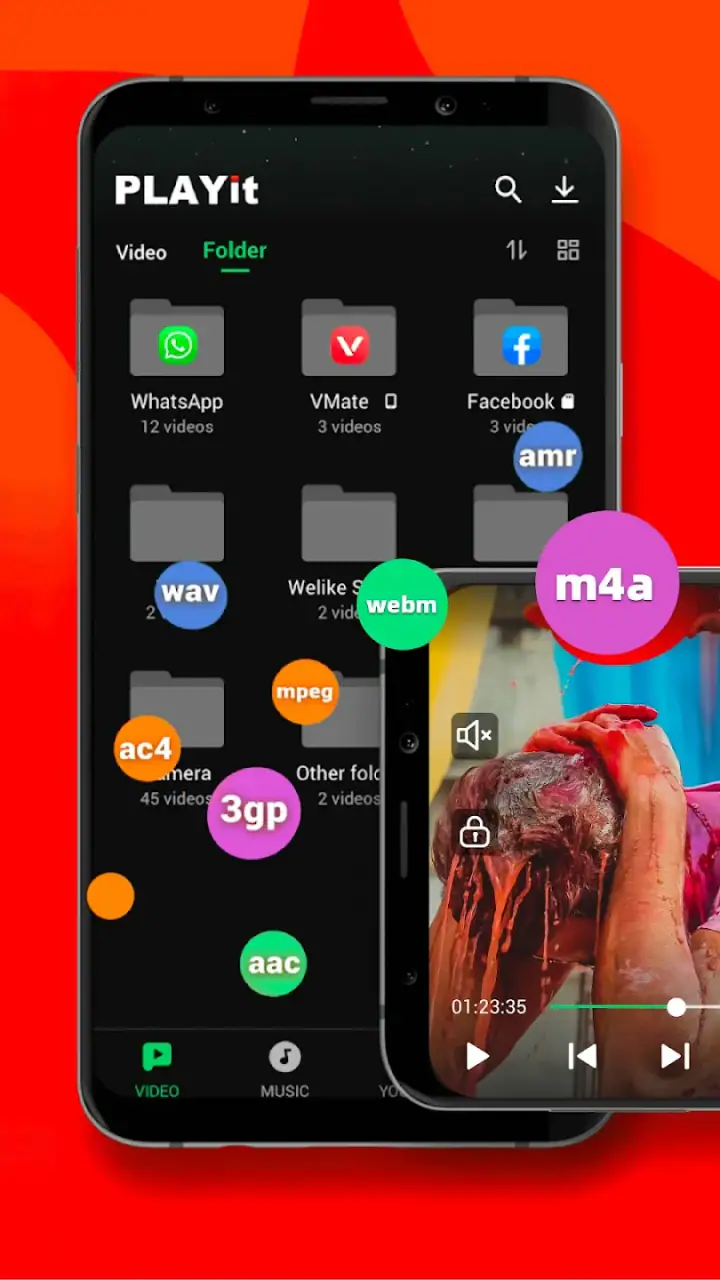
In normal use, the broad format support is the reason to consider PLAYit. People often collect media from different sources, and an all-purpose player can be less frustrating than discovering that one app handles video while another handles audio. The store summary describes support for all media files, and the practical appeal is clear: I can approach the library as a collection of media rather than as a list of file types that require separate decisions.
The app also suits users who want a straightforward answer to a straightforward problem: open a file and play it. I would recommend it to someone who receives videos through different channels, keeps music locally, or uses an Android device for offline entertainment. It is especially sensible for a secondary phone, travel device, or household tablet where installing several specialized players would create more confusion than value.
One useful workflow is to use the player as the final step in a media routine rather than as the place where the routine begins. Organize files first, rename unclear items, and then use PLAYit for playback. This prevents the app from becoming a dumping ground and makes its broad support more valuable. In my experience, the difference between a pleasant library and a messy one is usually preparation, not the player itself.
Another practical tip is to keep a few representative files available when changing phones or moving media. Test a standard video, a music file, and any unusual recording before deleting the originals. This is a sensible precaution for any player, but it matters more with an app chosen specifically for wide compatibility. If one important file behaves differently after a transfer, you want to discover that while the original is still safe.
Where it falls short compared with specialized alternatives
PLAYit is not automatically the right choice for every type of viewer. Someone who wants a highly technical player with extensive codec controls, detailed subtitle adjustment, network-stream handling, or fine-grained audio configuration may prefer a specialist alternative. A dedicated player can offer a more focused interface and deeper control, even if it handles fewer everyday tasks in one place.
Music-first users may also be happier with an app built around playlists, albums, queue management, and long-term listening habits. PLAYit’s advantage is breadth, not necessarily the richest music organization. If your phone is mainly a music library and you rarely watch local videos, a dedicated music player may feel more natural.
There is a similar trade-off for people who want to edit videos. The category includes video players and editors, but I would choose PLAYit primarily for playback. If your main goal is trimming clips, adding transitions, creating captions, or producing a finished video, an editing app designed for those tasks will be a better fit. PLAYit should not be selected merely because its category mentions editors.
The app’s broad purpose can also make it feel less specialized. A person who uses only one media type may see the extra scope as unnecessary. I like the flexibility, but I understand why someone might prefer a minimal player that does one job and stays out of the way. The right decision depends on whether reducing app count is more important to you than having a tailored experience.
Device requirements and long-term practicality
PLAYit supports Android devices running version 5.1 or later, which gives it a wide range of potential hardware. That does not mean every older phone will offer the same experience. Playback depends on the device’s processor, available storage, screen, speakers, and the files being opened. On an older device, I would keep expectations realistic and test demanding media instead of assuming that broad operating-system support guarantees perfect performance.
The current version is 2.7.47.26. When I assess an app like this, I pay attention to whether it remains useful as a device changes. A player that works on a spare or older Android phone can extend the life of that hardware, but storage and battery condition may become the real limitations. For a household, that can still be valuable: an older phone can serve as a simple offline media device without requiring a new purchase.
Because the app is free, trying it is relatively low-risk from an installation standpoint. I would nevertheless make the decision based on actual habits. If you need one broad local player and do not mind organizing your own library, it is a sensible experiment. If you need strict separation between users, advanced media controls, or a polished streaming ecosystem, I would look beyond it rather than trying to force the app into a role it was not designed to fill.
It is also worth remembering that a large user base does not settle every personal question. The app’s popularity can reassure someone who wants a widely used option, but it does not tell me whether its workflow matches a particular household. I would judge it by the files, devices, and boundaries involved in my own situation.
My household verdict
After using PLAYit as a broad video and music player, I see its strongest role clearly: it is a convenient shared playback tool for people who want fewer separate apps and who keep a varied collection of local media. Its free price, wide Android reach, and all-in-one approach make it easy to try, while the large install base and 4.5 average show that many users find the basic experience dependable.
I would recommend it to a household that can organize its files and communicate about shared use. It works well for a family tablet, a spare Android phone, or anyone who regularly switches between videos and music. My most important advice is to treat storage, privacy, purchases, and age-appropriate access as household responsibilities rather than assuming the player will manage those boundaries for you.
I would skip it when the priority is advanced playback control, a dedicated music experience, serious video editing, or strong separation between personal users. In those cases, specialized apps or device-level profiles are likely to serve you better. My final view is that PLAYit is best when convenience comes first, provided the people sharing the device establish the boundaries that the player itself cannot provide.
FAQs for PLAYit-All in One Video Player
What video formats does PLAYit-All in One Video Player support?
PLAYit-All in One Video Player supports a wide range of video formats including MP4, AVI, MKV, WMV, and more. The app is designed to handle high-definition videos seamlessly, ensuring you can watch your favorite content without worrying about compatibility issues.
Can I use PLAYit-All in One Video Player offline?
Yes, PLAYit allows you to play videos that are stored on your device without needing an internet connection. This makes it convenient for users who want to enjoy their media on the go or in areas with limited connectivity.
Does PLAYit support subtitle customization?
PLAYit offers robust subtitle support, allowing users to customize subtitle size, color, and font. This feature enhances viewing experiences by ensuring that subtitles are easy to read and synchronized with the video playback.
Is PLAYit-All in One Video Player free to use?
PLAYit is free to download and use, but it contains ads. There is also a premium version available for users who prefer an ad-free experience and additional features like advanced playback controls and enhanced audio settings.
How does PLAYit handle audio formats?
Apart from video, PLAYit also supports various audio formats such as MP3, WAV, and AAC. This versatility makes it a comprehensive media player, allowing users to manage and play both audio and video files within a single app.
Pros
- Supports multiple video formats.
- User-friendly interface.
- High-quality video playback.
- Built-in music player feature.
- Offline video download option.
Cons
- Contains ads during playback.
- No Chromecast support.
- Limited customization options.
- Requires frequent updates.
- Premium features behind a paywall.


